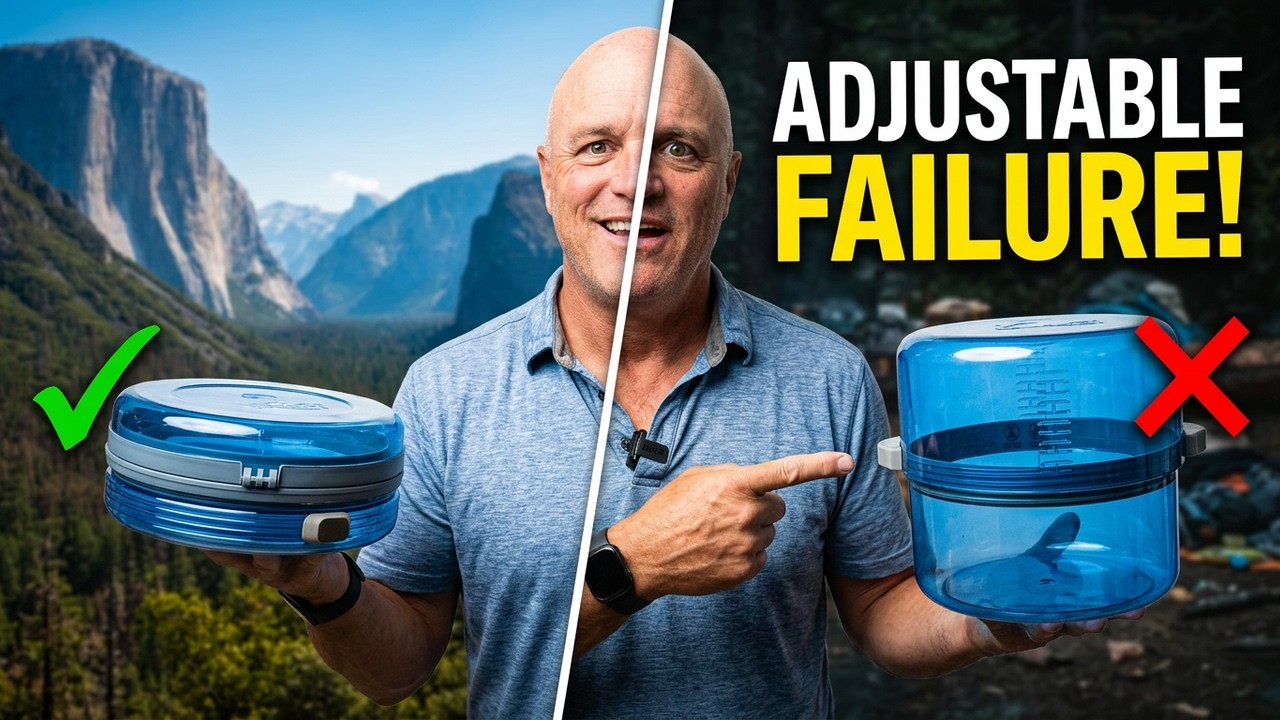
This Bear Canister Failed Our Yosemite Test | Here's Why
We put an adjustable-size bear canister to the test in Yosemite — here's why it didn't hold up.
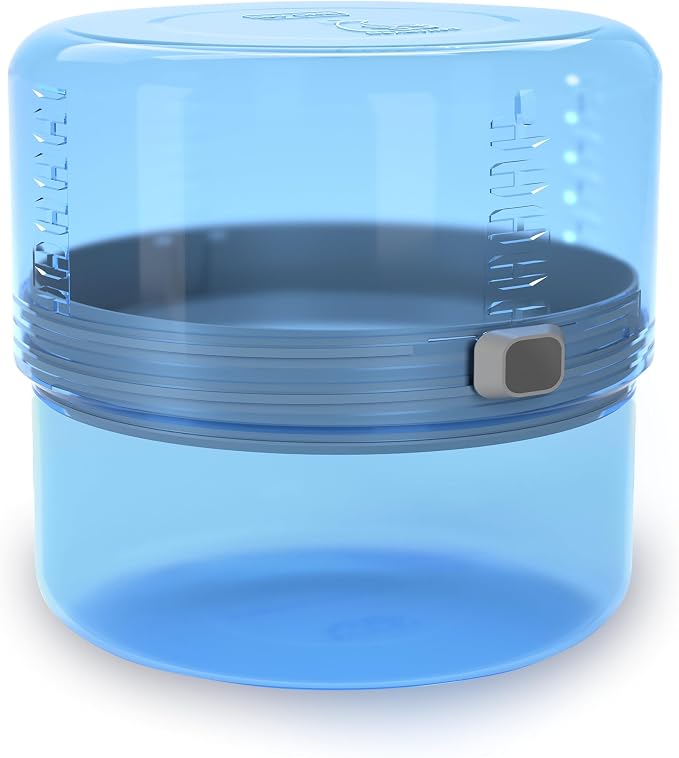
BearVault BV ONE Adjustable Bear Canister
What we like
- Adjustable sizing saves pack space on shorter trips
- Lightweight compared to fixed-volume canisters
What we don't
- Not on Yosemite's approved canister list
- Bears can pry open where canister parts come together
- Can get you turned away at the permit desk
Route Check
This Bear Canister Failed Our Yosemite Test | Here's Why
We bought an adjustable-size bear canister with high hopes and dreams of carrying less weight and bulk for our backpacking trip. It's a novel idea. Lightweight, adjustable, only use the space you actually need. But our hopes and dreams were soon crushed! We didn't get very far with this convenient bear canister.
Our trip nearly didn't happen at all -- it was nearly over before it began. If you hate lugging around heavy and bulky bear canisters this one may appear to be a perfect fit. But looks can be deceiving! It's always the pretty ones that crush your dreams!
DO NOT venture out into the wilderness until you watch this full video! It may save you a lot of hassles -- and may even save your life!
The Thing Nobody Tells You About Bear Canisters
Here's the trap we walked into, and it's an easy one: "bear-resistant" is not the same thing as "allowed where you're going."
A canister can be well-built, sturdy, sold on every major retail site, and covered in reassuring marketing language — and still get you turned away at the permit desk. That's because the parks don't evaluate your canister when you show up. They check it against a pre-approved list, and if it isn't on the list, it doesn't count. Full stop.
For Yosemite and the rest of the central Sierra, that list traces back to the Sierra Interagency Black Bear Group (SIBBG) — a coordinating body formed in 2000 by Yosemite, Sequoia and Kings Canyon, Inyo National Forest, and Stanislaus National Forest, specifically to reduce human-bear conflicts. They implemented a formal testing and approval methodology for food storage containers back in 2001. Separately, the Interagency Grizzly Bear Committee (IGBC) certifies canisters against a strength and durability standard.
Two things make this genuinely confusing:
- Approval bodies don't set the rules. Neither IGBC nor SIBBG decides what's permitted where. Each park or forest decides for itself which containers it accepts.
- "IGBC approved" isn't automatically enough. Some parks accept anything IGBC-certified. Others — Yosemite included — publish a short, specific list of permitted models. Yosemite also bans soft-sided Ursacks outright, even though Ursack carries bear-resistant certification of its own.
So the question isn't "is this a good bear canister?" The question is "is this exact model on the list for the exact place I'm going, on the dates I'm going?" That's the check we skipped.
What Happens If You Get It Wrong
Nothing dramatic. That's almost the worst part — you don't get a warning shot, you just get stopped.
A ranger checks your food storage when you pick up your wilderness permit. If your canister isn't allowed, you rent an approved one or you don't start the hike. Guessing wrong gets you a citation or a ranger sending you back to the trailhead.
A wilderness permit is required year-round in Yosemite for any overnight trip — backpacking, overnight climbing, anything. Reservations are required from late April through October. Of each trailhead's daily quota, 60 percent can be reserved 24 weeks ahead and the remaining 40 percent opens seven days out. Wilderness centers operate 8 a.m. to 5 p.m., and after-hours permits aren't available.
Which means: if you show up at 4:45 p.m. with a canister that isn't allowed, you have a problem that can't be solved that day.
The Safety Net: Rentals
The good news is that Yosemite rents canisters, and it's cheap.
You can rent a Garcia Backpackers' Cache 812 from any staffed wilderness permit station for $5 per week, with a $95 credit card deposit. No reservation needed or available. The Garcia is 12 inches tall, 8.8 inches in diameter, holds about 615 cubic inches (10 liters), and weighs 2 pounds 11 ounces.
Rental locations:
- Yosemite Valley — year-round, at the Wilderness Center in summer or the Valley Welcome Center in winter
- Wawona Visitor Center at Hill's Studio — summer only
- Tuolumne Meadows Wilderness Center — summer only
It's heavy, it's bulky, it's not exciting. It is also unambiguously legal, and $5 is a rounding error against the cost of a trip that doesn't happen.
How to Size a Canister
If you're buying rather than renting, volume matters more than most people expect. The working rule of thumb is roughly 1.6 liters of canister volume per person per day of food. Fully dehydrated meals compress toward 1.3 L/day; if you're bringing food in original packaging and a few comfort items, you're closer to 2.0 L/day.
Also worth knowing: a canister holds more than food. Toothpaste, sunscreen, lip balm, wet wipes, trash — anything with a scent goes in. First-timers routinely underestimate this and then can't get the lid on at camp.
What We'd Tell a Friend
- Check the park's own current list before you buy anything. Not a review site, not an Amazon listing — the park's website, for your specific destination and dates. Requirements change.
- Be skeptical of clever. Adjustable, collapsible, and packable designs solve a real problem, but novel designs are exactly the ones least likely to be on an approval list. That's the whole story of our video.
- If you're going once, rent. At $5 a week, buying only makes sense if you'll use it repeatedly.
- If you're buying, buy the boring one. Pick a model that's approved in the widest range of areas so a single canister covers you across multiple jurisdictions on one route.
- Pack it before you leave home. Load your actual food into your actual canister on your kitchen floor. Discovering it doesn't fit at the trailhead is a bad afternoon.
Yosemite bear canister rentals — National Park Service · Yosemite wilderness permits
⚠️ A Note on Conditions
Food storage rules exist for the bears, not for you. A black bear that gets human food once learns to seek it out, and bears that become food-conditioned frequently end up destroyed. Storing your food properly is genuinely a conservation act, not a bureaucratic hoop. Follow the rules for the specific area you're visiting, store everything scented in the canister, and never leave it open and unattended in camp. Requirements vary between parks and change over time — always verify with the managing agency before your trip rather than relying on any article, including this one.
Gear From This Trip
- Water filter: Our Katadyn Hiker Pro review — the other piece of gear we took on this same Yosemite trip.
- More Stuff: More of Our Favorite Gear – These are items we use regularly, some we even review for you!
Sources & Reference Links
- NPS Yosemite — Renting a Bear Canister (Garcia 812, $5/week, $95 deposit, specs, rental locations): https://www.nps.gov/yose/planyourvisit/bearcanrentals.htm
- NPS Yosemite — Wilderness Permits (year-round requirement, quotas, 8–5 hours, no after-hours permits): https://home.nps.gov/yose/planyourvisit/wildpermits.htm
- Sierra Nature Notes — SIBBG formation in 2000, member agencies, 2001 testing methodology: https://sierranaturenotes.yosemite.ca.us/Bears.htm
- Outdoor Herbivore — Where bear canisters are required (agencies don't set park rules; each area decides): https://blog.outdoorherbivore.com/camp-tips/where-bear-canisters-are-mandatory-in-the-us-parks-forest/
- Prime Hiking — Bear canister requirements by national park (Yosemite bans Ursacks; citation/turnaround risk): https://primehiking.com/articles/bear-canister-requirements-by-national-park/
- Hikeset — JMT bear canister guide (Yosemite defers to SIBBG; ~1.6 L/day sizing rule): https://hikeset.com/guides/jmt-bear-can-guide/
- Fresh Off The Grid — Bear canisters for backpacking (IGBC vs SIBBG explainer, Garcia availability): https://www.freshoffthegrid.com/bear-canisters-backpacking/